Last updated: April 30, 2026
Every year, the same conversation happens in payroll offices across the country.
An employee shows up confused. Their tax refund was tiny — or worse, they owe money. They thought they did everything right when they filled out their W-4 on day one of employment, and now they’re frustrated, embarrassed, or both. Sometimes they’re upset with their employer. Sometimes they want to blame the IRS. Almost always, they’re surprised.
If you’re a small business owner, you’ve probably been on the receiving end of this conversation. And while it’s not technically your job to manage your employees’ personal tax outcomes, you’re often the first person they come to.
Here’s the truth: most employees never revisit their W-4 after their first day on the job. They fill it out during onboarding, pick a few boxes they don’t fully understand, and then forget about it for years — even as their lives change, their pay changes, or the tax laws change.
That’s a problem for them. And it can become a headache for you.
The good news is, the IRS has a free, easy-to-use tool that solves this exactly. Better news: helping your employees use it is one of the simplest, most appreciated things you can do as an employer.
What is W-4 withholding, and why does it matter?
When an employee starts a job, they fill out Form W-4: Employee’s Withholding Certificate. This form tells you, the employer, how much federal income tax to withhold from each paycheck.
The amount withheld doesn’t change how much tax they actually owe at the end of the year. It just changes whether they pay it gradually throughout the year (through payroll) or all at once at tax time.
When withholding is set correctly, an employee’s tax bill at year-end is roughly $0. They don’t owe a big check, and they don’t get a huge refund either. That’s the goal — even if “huge refund” sounds like a good thing, it actually means they overpaid all year and lent the IRS money interest-free.
When withholding is wrong, two things happen:
- Too little withheld → the employee owes money at tax time, sometimes thousands. They may also face an underpayment penalty.
- Too much withheld → the employee gets a big refund, but they’ve been operating with less take-home pay all year than they needed.
Most W-4 problems come from people not realizing their situation has changed since they last filled out the form.
Life events that should trigger a withholding review
Here’s when an employee absolutely should revisit their W-4:
- Got married or divorced
- Had a baby or adopted a child
- A child became too old to claim as a dependent
- Started a second job or side hustle
- Spouse started or stopped working
- Bought a home (mortgage interest changes deductions)
- Big raise or bonus structure change
- Started receiving income from investments, rental properties, or self-employment
Any of these events can throw their withholding out of balance — sometimes significantly. And if they don’t update their W-4, they won’t find out until they file their tax return.
The IRS Tax Withholding Estimator: the easiest fix
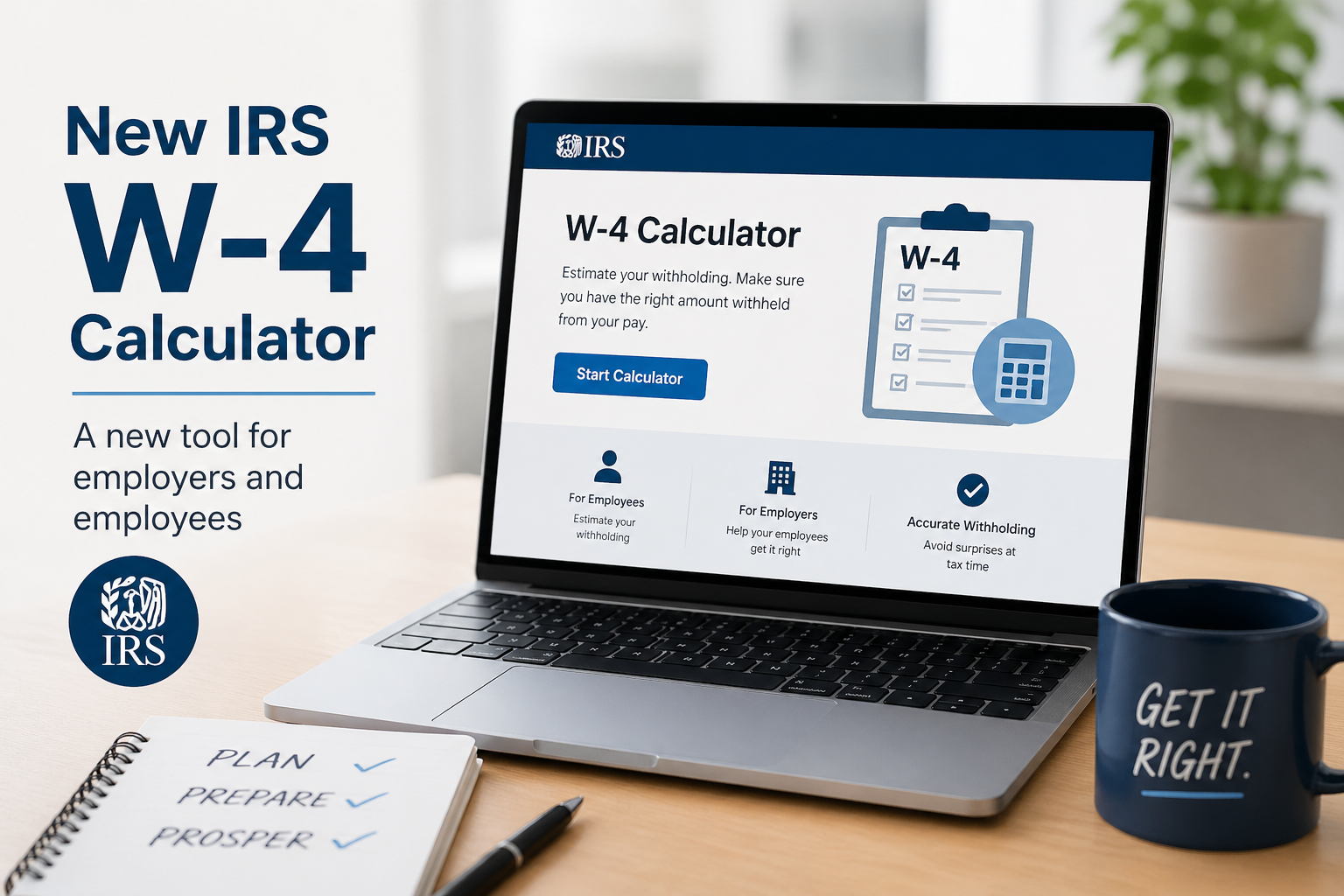
The IRS built a free online calculator that walks any employee through their personal tax situation in about 10 minutes and tells them exactly what to put on a new W-4 to land at the right withholding level.
It’s called the IRS Tax Withholding Estimator, and you can find it here:
👉 https://www.irs.gov/individuals/tax-withholding-estimator
Your employees will need a few things handy when they use it:
- Their most recent paystub
- Their spouse’s most recent paystub (if married and filing jointly)
- Their most recent tax return
- Estimated income from any other sources (side jobs, investments, rental income)
The tool walks through their situation step by step. At the end, it tells them whether they’re on track to owe money, get a refund, or break even — and gives them specific numbers to put on a fresh W-4 to fix any imbalance.
It’s the same calculation a CPA would do. The IRS just made it free and accessible.
How employers can help (without becoming tax advisors)
You’re not allowed to give your employees tax advice. You’re not their CPA. And you definitely don’t want to fill out a W-4 for them.
But you can do three simple things that make a big difference:
1. Tell new hires about the tool during onboarding. Most W-4s get filled out in five minutes during a stack of paperwork, with the employee guessing at the answers. A 30-second mention — “By the way, if you ever want to double-check your withholding, the IRS has a free tool that helps you set it correctly” — plants the seed.
2. Send an annual reminder. Once a year (January is ideal, before tax season hits), send a brief email reminding employees that life changes can affect their tax withholding, and pointing them to the IRS estimator. That’s it. You don’t need to advise them — just remind them the tool exists.
3. Make it easy to update. When an employee comes to you with a new W-4, make sure your payroll system can handle it quickly. If you’re still processing forms manually or using outdated software, this is where errors happen — and where employees get frustrated.
This is one of the reasons we built Payroll Freedom around an integrated platform. Our clients or employees can update W-4s in real time, and changes flow into the next payroll automatically. No paper, no delays, no calls to a national call center asking when the change will take effect.
What to do if employees ask you tax questions
This is where most owners get nervous. Here’s a simple script:
“I can’t give you tax advice — that’s something you’d want to talk to a CPA about. But the IRS has a free tool that walks you through your situation and tells you what to put on your W-4. It’s at irs.gov — search ‘tax withholding estimator.’ If you need help beyond that, I’d recommend talking to a CPA.”
That’s it. You’ve helped without overstepping, and you’ve protected yourself from any unintended advice.
If your employee needs more in-depth tax planning — they own a side business, have rental properties, or just want a real strategy — that’s where a firm like our sister company, Accounting Freedom, comes in. We do tax planning for small business owners and individuals across Illinois and Wisconsin year-round, not just at filing time.
Want help making W-4 management painless?
Whether it’s running payroll the right way, onboarding new employees with confidence, or making sure your team has the tools to manage their own tax situation — we’d love to help.
At Payroll Freedom, we’ve spent over 20 years simplifying payroll for small businesses across Illinois and Wisconsin. Our clients get a dedicated rep who knows their team, a modern platform that handles W-4 updates instantly, and the kind of personal service that makes situations like this easy instead of stressful.
Ready to make the switch — or just have questions?
- 📅 Request a meeting — 30 minutes, no pressure
- 🧮 Try our pricing calculator — see your exact weekly cost
- 🚀 Get started today — sign up and we’ll handle the rest
You don’t have to be the tax expert. You just need a payroll partner that makes the rest of it easy.
